


%20--%3e%3csvg%20version='1.1'%20id='Layer_1'%20xmlns='http://www.w3.org/2000/svg'%20xmlns:xlink='http://www.w3.org/1999/xlink'%20x='0px'%20y='0px'%20viewBox='0%200%2020%2020'%20style='enable-background:new%200%200%2020%2020;'%20xml:space='preserve'%3e%3cstyle%20type='text/css'%3e%20.st0{fill:%23FFFFFF;}%20%3c/style%3e%3cpath%20class='st0'%20d='M14.1,13.1l-3.8-3.8l-3.8,3.8l-1.2-1.2l5-5l5,5L14.1,13.1z'/%3e%3c/svg%3e)
Gemmologist: What They Do & Jewellery Valuation Costs

A gemmologist examines a gemstone with scientific instruments to establish what it is, whether it’s natural and whether it has been treated. You need one for probate, insurance, a sale or when you’re unsure a stone is genuine.
At Auctentic, gemmological valuations are free and come with no obligation. We see clients by appointment at our London office in Hatton Garden.
What does a gemmologist do?
A gemmologist answers a question that only sounds simple: what exactly are you holding? A stone can be beautiful and still hide characteristics that change what it is and what it’s worth. That’s why, when someone brings us an important piece, we never rely on first impressions.
- The work comes down to three steps.
Identifying the material. Diamond, ruby, sapphire, emerald or another gem; natural, synthetic (grown in a laboratory) or a simulant, meaning a different material made to look like it. - Describing the stone. Colour, transparency, cut, weight, dimensions, inclusions and optical properties.
- Looking for treatments. Heating, fracture filling, oiling or resin impregnation: a treatment can make a big difference to value.
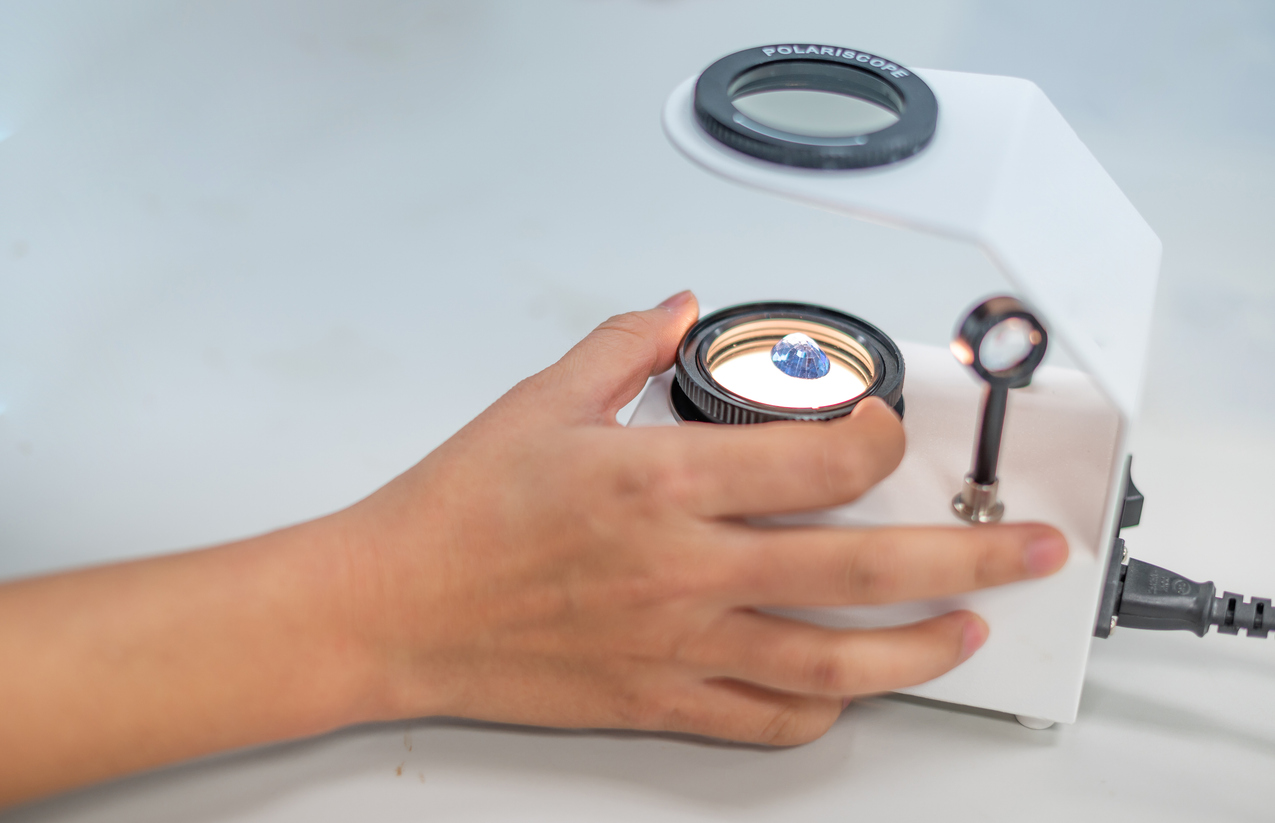
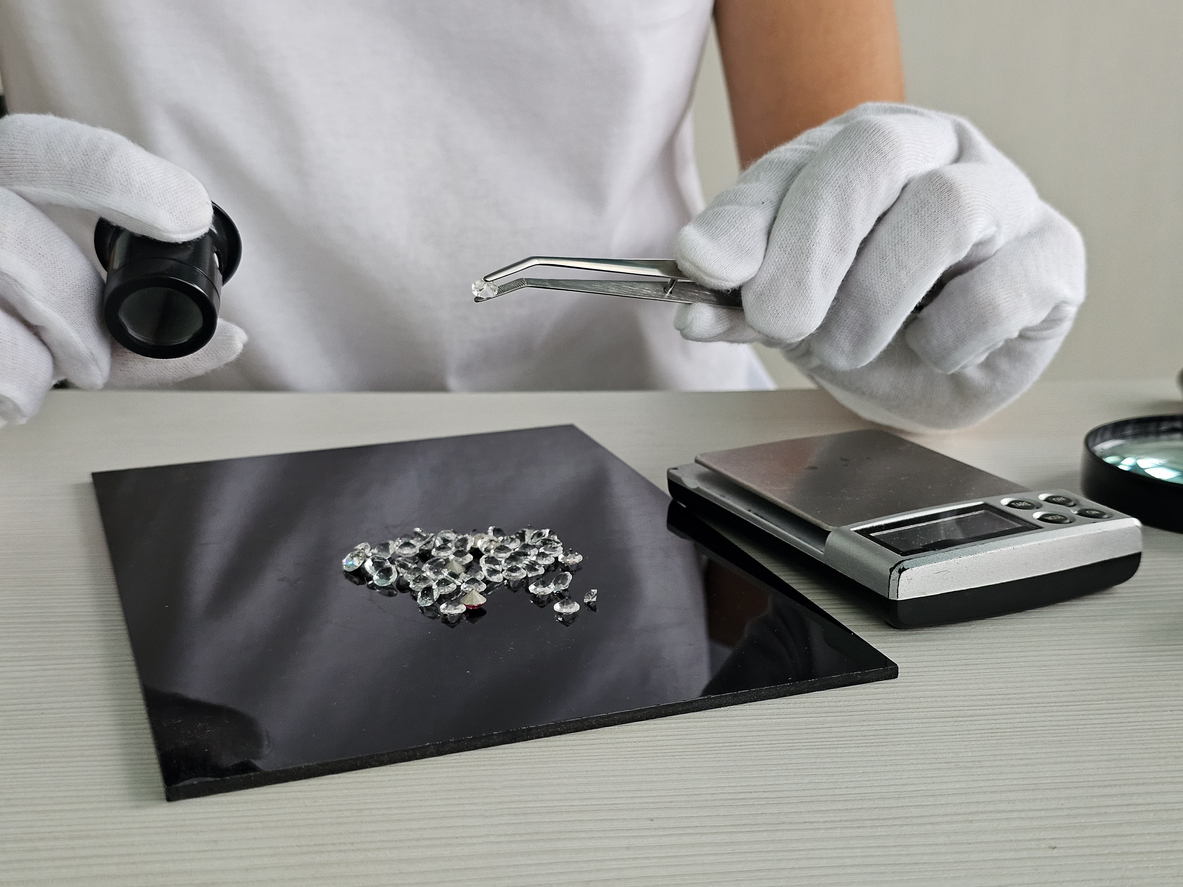
That takes instruments that see far more than the eye can: a loupe and gemmological microscope, precision scales, a refractometer, a polariscope and a spectroscope. A diamond’s clarity is assessed under magnification. Coloured stones often need optical testing to tell a natural gem from a synthetic or treated one.
By eye alone, you can’t establish much that’s decisive. A well-cut simulant can pass for a diamond, and a synthetic sapphire can look ‘better’ than a natural one. Even some instrument-based conclusions, such as a gem’s country of origin, can remain an opinion with a degree of probability. A good gemmologist knows what they can state with confidence and, just as importantly, what they can’t.
A note from our gemmologists. A treatment isn’t a flaw in itself. Most sapphires and rubies on the market have been heated, and almost all emeralds have been treated with oil or resin. What matters is that the treatment is identified, disclosed and properly reflected in the value.
When do you need a jewellery valuation?
You don’t have to be planning a sale to have a stone looked at. These are the situations people most often come to us with.
- Probate and dividing an estate. A clear value for each piece makes it easier to share an inheritance fairly and avoid family disagreements. For probate, HMRC expects jewellery to be valued at open market value; our guide to inherited jewellery in the UK explains what that means in practice.
- Insurance. To insure a valuable piece properly, you need to know exactly what you own and what it would cost to replace.
- Selling. Before you decide anything, an independent valuation shows you where the stone sits in the market and lets you compare offers calmly.
- Doubts about authenticity. A stone that was inherited, bought many years ago or comes with incomplete paperwork deserves a check, especially if it might be synthetic, an imitation or treated. If it’s a diamond, our guide on how to recognise a real diamond covers the first checks.
A note from our gemmologists. Insurance value and resale value are two different figures. The first is what it would cost to replace the piece at retail; the second is what you could realistically get by selling it. That’s why, before every valuation, we ask which of the two you actually need.
What’s the difference between a valuation and a gemstone certificate?
A certificate describes the stone; a valuation tells you what it’s worth. Mixing the two up is the most common mistake we see.
| Gemstone certificate (lab report) | Jewellery valuation | |
|---|---|---|
| What it tells you | What the stone is: species, natural or synthetic, colour, cut, weight, detectable treatments | What the stone is worth, for a specific purpose |
| Gives a value? | Usually not | Yes |
| Issued by | A gemmological laboratory | A gemmologist or registered valuer |
| Useful for | Documenting, buying or selling a stone | Probate, insurance, dividing an estate or a sale |
The major laboratories are clear about this: GIA states that its reports are not an appraisal of a stone’s value. Equally, a valuation can’t stand in for a certificate unless it includes the testing needed to identify the gem. To see how the leading labs’ reports differ, read our comparison of GIA, IGI, HRD and AGS certificates. If your diamond has an IGI report, our guide to reading an IGI certificate takes you through it line by line.
A note from our gemmologists. A certificate issued twenty years ago describes the stone as it was then. Since that time, it may have been reset, chipped or, in rare cases, swapped. That’s why we always compare the paperwork with the stone in front of us: the document matters, but it’s no substitute for an examination.
How much does a jewellery valuation cost?
In the UK, a jewellery valuation typically costs between £50 and £150 per item, and many valuers add a document fee of around £70 to £100. Specialist valuers in London often start at £150 to £175 per item, while some charge per carat for larger diamonds or a percentage of the item’s value, usually 1–2%. These figures come from valuers’ published price lists and give a sense of scale rather than a fixed tariff.
Prices vary because no two valuations are quite the same. The main factors are:
- the type of gem and how much testing it needs;
- whether the stone is loose or set in a piece of jewellery;
- how many items need examining;
- the type of document required and what the valuation is for.
At Auctentic, the valuation is free. We examine the stone with you, explain what we’re seeing and give you a value, with no fee and no obligation to sell. The valuation is verbal, but if you’d like, we can give you a short written summary of our findings. It isn’t a formal valuation document: if you need one, for example for your insurer, we’ll tell you what to ask for and what it should include.
A note from our gemmologists. Before paying for a figure, ask yourself what question it needs to answer. A valuation for insurance, one for probate and one for a sale can produce different figures for the same stone, and all of them can be correct: the purpose determines the method. Our article on how much a ruby is worth shows how this plays out for a coloured gemstone.
How do you choose a gemmologist?
Choose a gemmologist the way you’d choose any adviser trusted with something valuable: on verifiable qualifications, a clear method and genuine independence.
The qualifications that carry real weight are internationally recognised ones. In the UK, look for the FGA or DGA from the Gemmological Association of Great Britain (Gem-A), or diplomas from GIA and IGI. For formal valuations, membership of the Institute of Registered Valuers (IRV) offers extra reassurance. Letters after a name aren’t enough on their own, though: always ask what tests will be carried out and what you’ll receive at the end.
Warning signs to look out for:
- a final figure given without the stone ever being examined;
- very confident claims about origin or authenticity based on appearance alone;
- a valuer who rushes you and pushes you to sell straight away.
The last point matters most. A valuation should help you decide in your own time, not close a deal on the spot. At Auctentic, the valuation is free and leaves you entirely free to choose: if you ever decide to sell your gemstones, we’ll discuss it separately and only if you ask.
What happens during a valuation?
In every valuation, we start from the stone, never from expectations about what it ought to be worth. This is what we examine, and in what order.
- The piece as it is. We look at the stone in its current setting and, where possible, check its weight and measurements.
- The stone’s characteristics. Cut, colour, transparency and internal features, with a loupe and microscope.
- Identification and treatments. We use the instruments suited to that particular gem to establish what it is and whether it has been treated.
- The paperwork. If there’s an earlier certificate, we compare it with what we’ve observed ourselves.
- The value. Only at the end do we turn to the market valuation, always keeping it separate from the gemmological findings.
How long does it take? It depends on how complex the piece is: a single stone with known characteristics takes less time than an elaborate piece of jewellery or a collection being divided between heirs.
Can the owner be present? Yes, and we prefer it, as long as the type of examination allows. You can follow the process, ask questions and understand why a particular feature does, or doesn’t, affect the value. At the end, you decide what happens next, in your own time.
A note from our gemmologists. A set stone tells you less than a loose one. The setting can hide part of the stone and stops us weighing it directly, so some measurements have to be estimated with care. When that could make a real difference to the value, we’ll tell you so plainly.
Where can you find a gemmologist in London?
We see clients in person at our office on Greville Street, in Hatton Garden, London’s historic jewellery quarter. Valuations are free and by appointment only.
Our London office
- Address: 8–9 Greville Street, London EC1N 8SB
- Phone: +44 7591 044179 · WhatsApp
- Email: uk.office@auctentic.com
- By appointment only
Not based in London?
If getting to London isn’t practical, you can send your piece to us instead. We arrange free, fully insured shipping to our London office, where our gemmologists will examine and value it professionally. Just get in touch and we’ll explain how it works.
Frequently asked questions
- Can a gemmologist tell if a stone is real?
Yes, within the limits of the tests available. A gemmologist identifies the material, tells a natural gem apart from a synthetic or an imitation and picks up any detectable treatments.
- How much does a jewellery valuation cost?
In the UK, usually £50 to £150 per item, often plus a document fee, and more with specialist valuers or for large stones. At Auctentic, the gemmological valuation is free.
- Does a gemstone certificate tell you what a stone is worth?
Usually not. A certificate describes and grades the gem; a valuation puts a figure on it for a specific purpose, such as insurance or probate.
- Can I have a stone valued without selling it?
Of course. Many of our clients come to us for probate, insurance or simply to find out what they own. The valuation doesn’t commit you to anything.
- Can I be present during the valuation?
Yes, and that’s how we prefer to work. You can follow the examination, ask questions and see which characteristics affect the value.
- How long does a valuation take?
It depends on how complex the stone or piece is. A single stone takes less time than a whole collection.
- How do I find a gemologist near me?
Searching for a specialist in your area is a good start. For anything valuable, also check their qualifications, equipment, independence and whether they’ll examine the piece in front of you. Auctentic sees clients by appointment at its London office in Hatton Garden.
Book a free gemmological valuation
Do you have a valuable stone, an inherited piece or a certificate you’re not sure about? Get in touch and we’ll arrange an appointment at our London office. The valuation is free, confidential and comes with no obligation to sell.


