


%20--%3e%3csvg%20version='1.1'%20id='Layer_1'%20xmlns='http://www.w3.org/2000/svg'%20xmlns:xlink='http://www.w3.org/1999/xlink'%20x='0px'%20y='0px'%20viewBox='0%200%2020%2020'%20style='enable-background:new%200%200%2020%2020;'%20xml:space='preserve'%3e%3cstyle%20type='text/css'%3e%20.st0{fill:%23FFFFFF;}%20%3c/style%3e%3cpath%20class='st0'%20d='M14.1,13.1l-3.8-3.8l-3.8,3.8l-1.2-1.2l5-5l5,5L14.1,13.1z'/%3e%3c/svg%3e)
How Much Is a Ruby Worth?

A natural ruby can be worth anything from a few hundred euros per carat, for heated stones of commercial quality, to tens of thousands of euros per carat for fine-quality untreated specimens. Two rubies of the same weight can therefore differ enormously in value: what sets them apart is, above all, colour, clarity, the absence of treatment and origin.
When a ruby is entrusted to us for valuation, it is rarely a stone that was bought with the intention of reselling it. More often, it is a gem that forms part of a family story: an inherited ring, a piece of jewellery kept safe for years, a stone about which little is known and whose history sometimes survives only in someone's memory. It is in these cases that the question "how much is a ruby worth?" takes on a different meaning.
Every valuation we carry out starts from this principle. First comes an understanding of the stone; only then, if the owner wishes, do we discuss the options the market offers. It is not simply a matter of quoting a price per carat. It is about understanding what is in front of us, what characteristics it genuinely has and how desirable it is on today's market.
At a glance
- Fine-quality unheated ruby: approximately €2,000 to over €30,000 per carat, depending on weight, colour and clarity.
- Good-quality heated ruby: approximately €900–10,000 per carat.
- Commercial-quality heated ruby: approximately €300–2,500 per carat.
- Glass-filled ruby: approximately €50–1,000 per carat, a fraction of the value of a natural untreated stone.
- What matters most: colour carries the greatest weight, followed by clarity and transparency, treatment, origin and carat weight.
These are indicative market values, not an official price list.
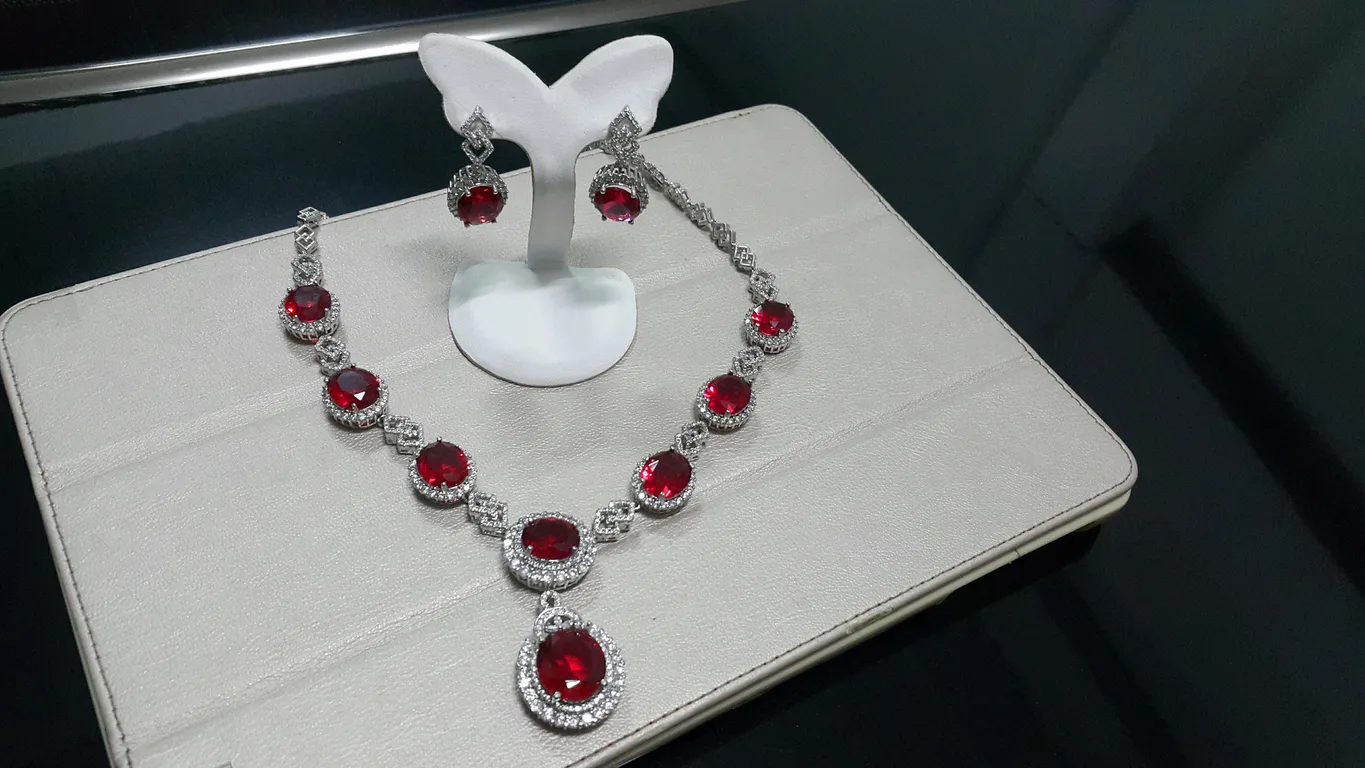
How much is a ruby worth in euros?
There is no universal price list for rubies. The price depends on the combination of characteristics of each individual stone, and it can vary dramatically even between two specimens that look alike.
As a rough guide, a commercial-quality heated ruby starts at a few hundred euros per carat. A well-cut ruby with attractive colour can reach several thousand euros per carat, while natural untreated stones of fine colour and clarity, and of significant size, easily exceed €10,000 per carat.
The auction market shows just how wide this scale can be. In Geneva, Sotheby's offered an unmounted 6.49-carat Burmese ruby accompanied by an SSEF (Swiss Gemmological Institute) report stating no indications of heating and minor oil in fissures, with an estimate of CHF 130,000–180,000 (approximately €140,000–190,000). In another sale, by contrast, an unheated 7.49-carat Burmese ruby with surface-reaching inclusions and a large chip was estimated at just CHF 12,000–18,000 (approximately €13,000–19,000).
Two stones of the same origin, both unheated and of similar weight, with estimates roughly ten times apart. They are not benchmarks for an ordinary ruby, but they show in concrete terms that the quality and condition of a stone matter far more than its carat weight. That is why, when we are asked the price of a ruby, we never start with the carat weight: we start with the stone.
How is the value of a ruby calculated?
The value of a ruby is determined first by its colour, the most important factor, and only afterwards by its carat weight. For rubies specifically, our order of analysis is generally:
- colour;
- clarity and transparency;
- treatment;
- origin;
- carat weight.
To these we add the cut, proportions, symmetry, any fractures and, where the ruby is set, the quality and nature of the piece of jewellery.
This approach should not be confused with the one used for diamonds. With diamonds, the so-called 4Cs (colour, clarity, cut and carat) form a well-established grading system. With rubies, colour is by far the dominant factor: as the GIA explains, in the finest stones even small differences in hue, saturation and tone can make a significant difference to value.
Clarity needs equally careful interpretation. A natural ruby completely free of inclusions is extremely rare, so the mere presence of inclusions is not a flaw in itself. What matters is their nature, their visibility, their effect on transparency and brilliance and, in some cases, what they reveal about the stone's origin. Fractures that reach the surface are a different matter: they can compromise the gem's durability and weigh on its value.
Treatment is another decisive factor. An untreated ruby, a heated ruby and a glass-filled ruby may look superficially alike, yet belong to completely different segments of the market.
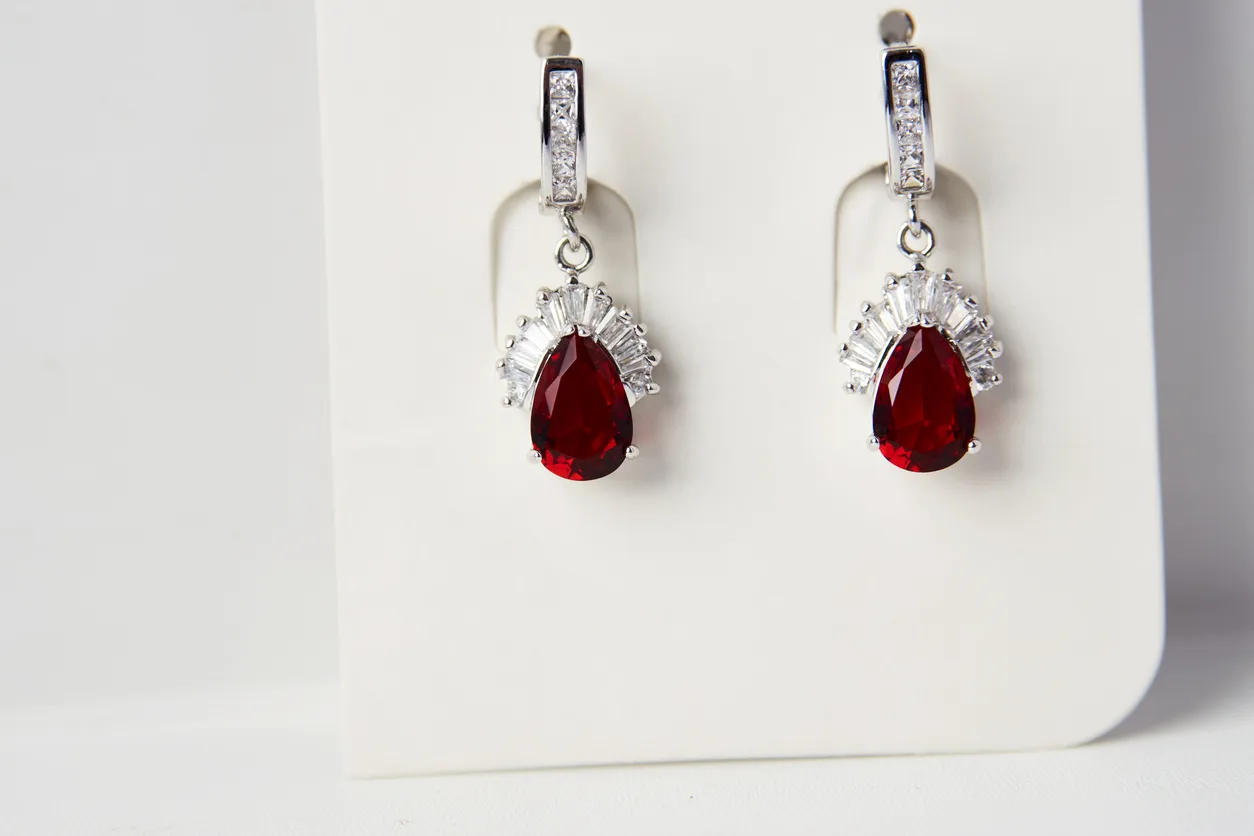
Ruby colour
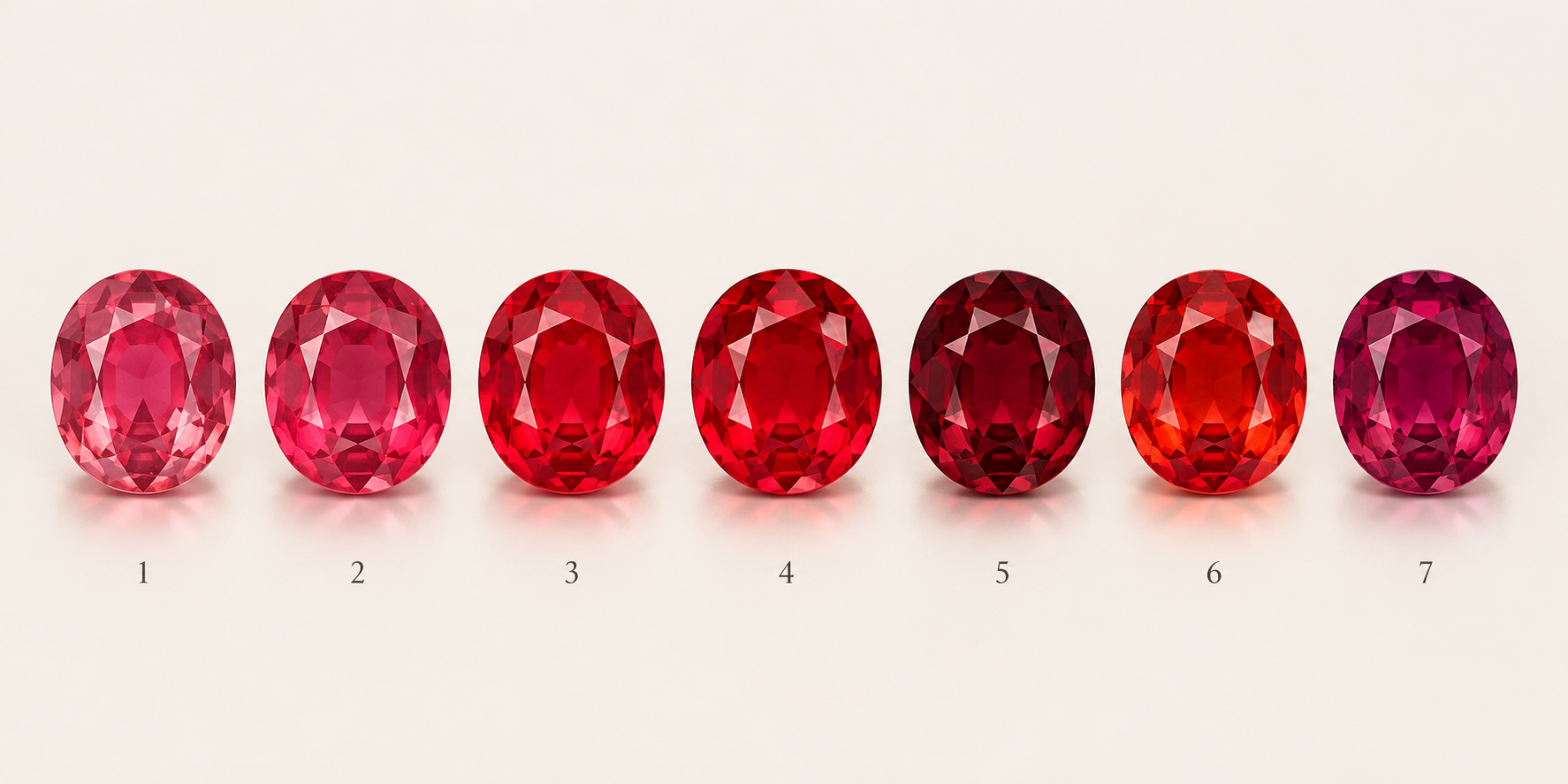
The most sought-after colour is a pure, vivid red: intense and well saturated, but not too dark. Pronounced orange or purplish undertones, by contrast, reduce its value.
One of the best-known (and most overused) terms in the ruby trade is "pigeon's blood", or "pigeon blood red". The term describes a particular colour quality, but it should not be taken as an automatic guarantee of high value. Naming criteria can vary between gemmological laboratories. SSEF and Gübelin, for example, have harmonised their criteria: the colour must be an intense, saturated and even red, with no obvious secondary hues such as blue or brown, and the term is reserved for fine-quality stones whose colour and clarity have not been modified in any way. In practice, then, the name alone guarantees nothing: what counts is the report from the laboratory that assigns it.
Treatments: untreated, heated and glass-filled rubies
Treatment is one of the factors that can have a decisive effect on a ruby's valuation. Heating, which is widespread in the market, is used to improve colour and transparency. A heated ruby can still be an interesting stone, but the treatment must be taken into account in the valuation.
When a stone already has outstanding natural beauty, the absence of any treatment adds considerable value. This is the rarest segment of the market, and the price difference compared with a heated stone of similar appearance can be substantial.
Glass-filled rubies, particularly those filled with lead glass, are a different story. These are generally heavily fractured stones that have been treated to improve their appearance. The material is so unstable that the GIA describes it in its reports as a "manufactured product" (a combination of ruby and glass) rather than simply a treated ruby.
A glass-filled ruby is worth a fraction of the value of a comparable natural ruby, in some cases no more than a tenth. This is precisely why an in-depth analysis is needed to establish what a ruby is really worth.
Ruby price per carat: indicative ranges
How much does a ruby cost? To help owners get their bearings, we have compiled the table below using public market references, commercial comparables and auction results, together with the quality criteria set out in the gemmological literature. The figures are indicative and do not constitute an official price list. The upper end of each range covers stones that combine several favourable characteristics with their carat weight.
|
Weight |
Unheated, fine quality (€/ct) |
Heated, good quality (€/ct) |
Heated, commercial quality (€/ct) |
Glass-filled (€/ct) |
|---|---|---|---|---|
|
0.50–0.99 ct |
€2,000–8,000 |
€900–2,500 |
€300–900 |
€50–300 |
|
1.00–1.99 ct |
€4,000–15,000 |
€1,200–4,000 |
€500–1,200 |
€100–500 |
|
2.00–2.99 ct |
€6,000–20,000 |
€1,800–5,000 |
€600–1,500 |
€150–700 |
|
3.00–4.99 ct |
€8,000–25,000 |
€2,500–7,000 |
€700–2,000 |
€200–900 |
|
5 ct and above |
€10,000–30,000+ |
€3,000–10,000+ |
€800–2,500+ |
€250–1,000+ |
Auction results for exceptional rubies are not used as an "average price", but as evidence of the top end of the market.
It is also worth remembering that the price per carat does not rise in a straight line. For the same quality, a 3-carat ruby can be worth well over three times as much as a 1-carat ruby: when colour and clarity remain high, large stones become scarcer and the price per carat rises sharply.
Origin: Burma, Mozambique and beyond
Origin can increase a ruby's value, but it never replaces the quality of the stone. Burma, now Myanmar, and the Mogok region in particular, remains one of the most historically important sources of high-quality rubies. Over recent decades, however, Mozambique has become one of the main sources, producing stones that can reach very high quality. There is also significant production in Vietnam, Tanzania, Madagascar and Afghanistan.
Origin affects value mainly when it is documented by a qualified laboratory, but it should never be considered in isolation: it adds context, not quality. As Sotheby's points out, "Burmese" denotes a geographical origin, not a quality standard. A mediocre ruby does not become exceptional simply because it comes from Mogok, as the 7.49-carat Burmese ruby mentioned above shows. Conversely, a Mozambican ruby of extraordinary quality can far exceed the value of a mediocre Burmese stone.
Natural or synthetic ruby?
Before putting a price on a ruby, we need to establish exactly what we are looking at, because a synthetic ruby is worth a small fraction of a natural ruby of similar appearance.
A natural ruby is a corundum formed in nature, coloured mainly by chromium. A synthetic ruby belongs to the same mineral species but has been produced artificially in a laboratory. The two are told apart through gemmological observation, the study of inclusions and, where necessary, more advanced instrumental analysis.
This is one of the reasons we attach no evidential weight to photographs, loupe observations or simple home tests. They may be of interest as a first look, but our benchmark is always a gemmological examination.
The gemmological certificate
For a ruby of significant value, a report from an independent laboratory is the document that underpins the valuation. In our experience, it should clearly state:
- the species and variety (corundum, variety ruby);
- whether the stone is natural or synthetic;
- the carat weight;
- the measurements;
- the cut;
- the colour;
- any treatments;
- the geographical origin, expressed as the laboratory's opinion.
The report must be read carefully. "No indications of heating" and "untreated" are not the same thing: as Sotheby's also makes clear, the former refers only to heat treatment. The 6.49-carat ruby mentioned above, for example, shows no indications of heating, yet its report notes minor oil in fissures. Geographical origin, too, is a gemmological opinion, not something that can be deduced simply from the colour of the stone.
If the ruby is set in jewellery
A mounted ruby can be valued without removing it from its setting, although the mount places some limits on the examination. This is a very common situation in the valuations we receive: the ruby arrives set in a ring that belonged to a parent, a pendant passed down through the family or a piece bought many years ago. In these cases, the stone should not be considered in isolation from the context in which it has been kept.
During the initial examination, we look at the colour, transparency, cut, visible inclusions, measurements and the features of the setting. But part of the ruby may be hidden by the claws, some inclusions may not be visible and the measurements may be less precise. In addition, certain features that are important for identifying a treatment may require a view that the setting does not allow.
In any case, we never alter a piece of jewellery just to "get a number". Our job is to provide a professional valuation of the object – its quality, characteristics, available documentation and position in the market – and to advise whether further investigation genuinely makes sense.
What is a second-hand ruby worth?
A ruby does not lose value simply because it has been set in jewellery and worn for many years. For a gemstone, the idea of "second-hand" matters far less than people tend to think: if the stone has rare characteristics, they remain rare regardless of the jewellery's history. Indeed, when we receive an inherited piece, its provenance can help us reconstruct the history of the stone. What does matter is the ruby's current condition: abrasions, chips or surface fractures can affect its value.
Of course, the value of the ruby must be distinguished from that of the piece as a whole. A signed setting, particularly fine craftsmanship, the period, the materials and documented provenance can all add value in their own right. That is why we do not simply assess "how much the ruby is worth", but try to understand what the piece in front of us represents.
Frequently asked questions
How much is a 1-carat ruby worth?
It depends above all on colour, treatment and clarity. As a guide: €500–1,200 per carat for a commercial-quality heated ruby, €1,200–4,000 per carat for a good-quality heated ruby, and from €4,000 to over €15,000 per carat for a fine-quality unheated ruby. A glass-filled ruby sits between €100 and €500 per carat.
How much is a 2-carat ruby worth?
A fine-quality natural unheated ruby of 2–3 carats is worth roughly €6,000 to over €20,000 per carat, which means from around €12,000 upwards for the whole stone. A heated ruby of the same weight sits between €600 and €5,000 per carat, depending on quality.
Is an unheated ruby always worth more?
Not necessarily. The absence of heating is particularly significant only when it comes with excellent colour, good transparency and substantial size.
How much is a pigeon's blood ruby worth?
There is no set price for this term. It describes a particular colour quality, the criteria can vary between laboratories and, according to SSEF and Gübelin, it applies only to fine-quality stones that have not been treated. The value always depends on the stone's characteristics as a whole.
Is a Burmese ruby always worth more than a Mozambican one?
No. Origin is only one element of the valuation. An exceptional Mozambican ruby can be worth more than a lower-quality Burmese ruby.
Which is worth more: a ruby, a sapphire or an emerald?
There is no fixed hierarchy. At fine quality, rubies are among the most highly valued coloured gemstones, but a comparison only makes sense stone by stone, taking into account colour, treatments, size and origin.
How can I tell if my ruby is natural?
Identification requires a gemmological examination. Photographs and home tests are not enough to establish reliably whether a stone is natural or whether it has been treated.
My ruby is set in jewellery: can it still be valued?
Yes. An in-person examination establishes which characteristics can be observed directly and whether the setting calls for further investigation.
How much does a carat weigh?
One carat equals 0.2 grams. Weight, however, is only one of the factors that determine a ruby's value, and not the most important one.
After the valuation
Valuing a ruby and selling it are two separate decisions. The first is about understanding what you own; the second remains entirely yours, to make in your own time.
Auctentic works with natural untreated rubies of 2 carats and above, whether loose or set in jewellery. Our valuations are private and carry no obligation, and they are carried out by GIA-certified gemmologists. Because we do not buy stones for our own stock, we have no interest in undervaluing yours. If you would like to take things further, you can find everything you need to know about how to sell gemstones with Auctentic.

