


%20--%3e%3csvg%20version='1.1'%20id='Layer_1'%20xmlns='http://www.w3.org/2000/svg'%20xmlns:xlink='http://www.w3.org/1999/xlink'%20x='0px'%20y='0px'%20viewBox='0%200%2020%2020'%20style='enable-background:new%200%200%2020%2020;'%20xml:space='preserve'%3e%3cstyle%20type='text/css'%3e%20.st0{fill:%23FFFFFF;}%20%3c/style%3e%3cpath%20class='st0'%20d='M14.1,13.1l-3.8-3.8l-3.8,3.8l-1.2-1.2l5-5l5,5L14.1,13.1z'/%3e%3c/svg%3e)
Selling Jewellery and Diamonds Held in the Geneva Freeport

Some of the most significant pieces we are asked about have not been seen in years. They sit in a vault at the Geneva Freeport, placed there by a parent, a family office or the owner themselves, often at a time when the question was how to keep them safe, not what they are worth today.
When that question changes, owners usually ask the same things. Can the pieces be assessed without moving them? Can they change hands while they stay in Geneva? And what happens with VAT and customs once they leave?
This guide explains how the Geneva Freeport works for jewellery, diamonds and collectible watches, how a sale can be organised from inside it, and how Auctentic, as a Private Advisory House acting only for the seller, can manage the process on your behalf. The decision, at every step, stays yours.
What the Geneva Freeport is
The Geneva Freeport is operated by Ports Francs et Entrepôts de Genève SA (PFEG), with sites at La Praille and at Geneva Airport. Under Swiss law it is a dépôt franc sous douane (customs free warehouse): a part of the Swiss customs territory that is separated from the rest and placed under customs supervision, where goods that are not in free circulation can be stored without import duties being charged (Swiss Customs Act, art. 62).
In practice this means:
Duties and Swiss VAT are suspended while goods stay in the bonded area, until they are definitively imported into a destination country. PFEG also offers a separate "Swiss" (duty-paid) storage regime on the same site, so it is worth checking which regime your pieces are actually in.
Storage time is not limited for foreign goods (Customs Act, art. 65 para. 2). Swiss goods placed under the export procedure are different: they must normally leave Switzerland within six months, with extensions possible on request.
Every movement in or out needs proper customs documents. Goods arriving from abroad come in under a transit document (T1, T2, T-CH and similar).
The Freeport is not an anonymous space. Since 1 January 2016, the Swiss Customs Ordinance has required the operator to keep an electronic inventory of "sensitive goods", including the name and address of the owner, and to present it to the Federal Office for Customs and Border Security (FOCBS) on request. Pearls, diamonds, gemstones, precious metals, jewellery (ex customs chapter 71) and watches of tariff heading 9101 are all on the list of sensitive goods. PFEG has also introduced its own checks on tenants and beneficial owners against SECO, FINMA and Interpol databases.
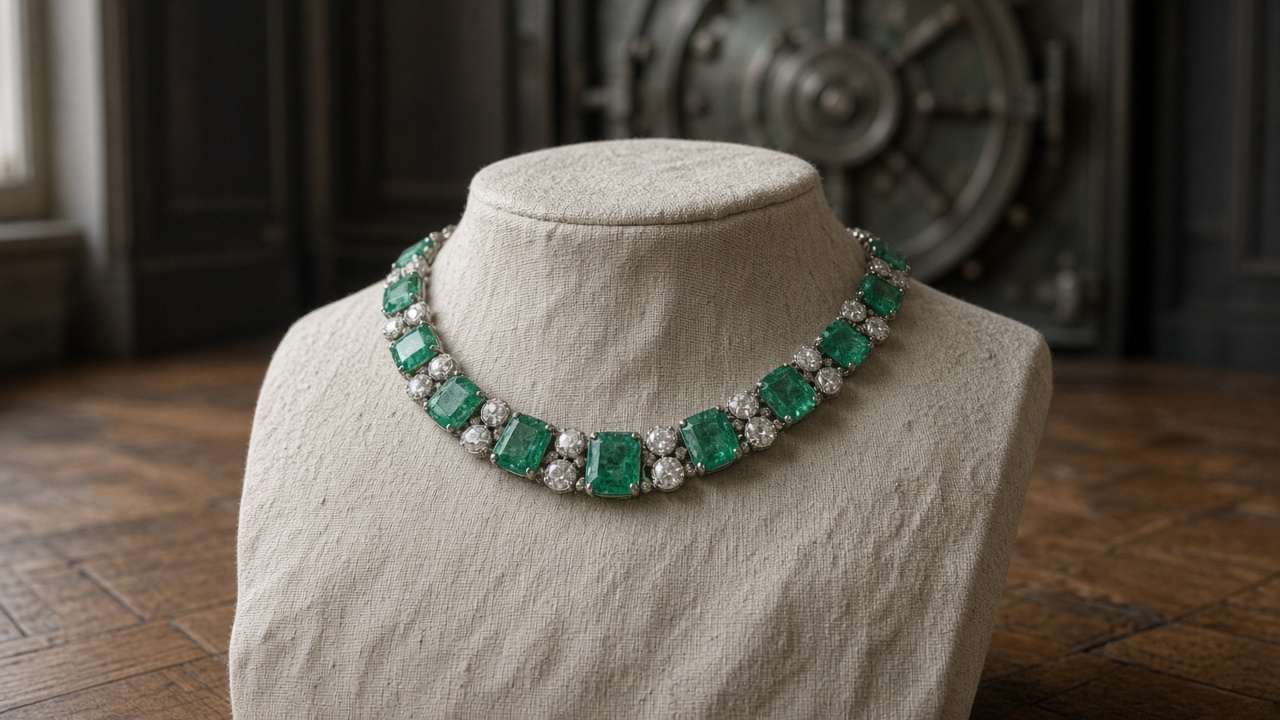
Can you sell from inside the Freeport?
Yes, in principle. Swiss VAT law exempts the supply of goods that are proven to have stayed under customs supervision in a free warehouse and have not lost that status retroactively (Swiss VAT Act, art. 23 para. 2 no. 3bis). A piece can therefore change owner while it remains in Geneva, and the inventory records the change, including the original depositor where goods are taken over by another depositor (Customs Ordinance, art. 184).
Two points matter in practice:
Access is controlled. Only the warehouse operator, depositors and tenants, or people authorised by the customs office or the operator, may enter the bonded area. An expert or a prospective buyer can enter only with that authorisation.
Retail-style sales are restricted. FOCBS rules prohibit direct sale or handover of goods to private individuals inside a free warehouse, unless the local customs office grants an exception. Auctions held inside also need a prior authorisation. Sales to professional buyers, followed by a proper customs exit, are the usual route. The exact structure should be confirmed with the company that holds your goods and its customs agent.
PFEG states that it has a showroom inside the bonded area for presenting goods to prospective clients. This is where an examination and viewing can take place.
How a sale from the Geneva Freeport works with Auctentic
The steps below describe how we propose to manage a Freeport sale.
1. A confidential first conversation
You, your family office, private banker or lawyer contact us. We ask what matters most to you right now: time, clarity, or discretion. We then ask for what you already have: photos, existing grading reports (for example GIA, HRD or IGI), purchase invoices, insurance valuations and the storage reference. All images and information are treated with full confidentiality and used only for the valuation.
2. A preliminary range, before anyone travels
From the documents, our specialists give you an indicative range based on current international market data and comparable transactions. Purchase and insurance figures are often far above today's resale market, so we explain how the range is built before discussing any number.
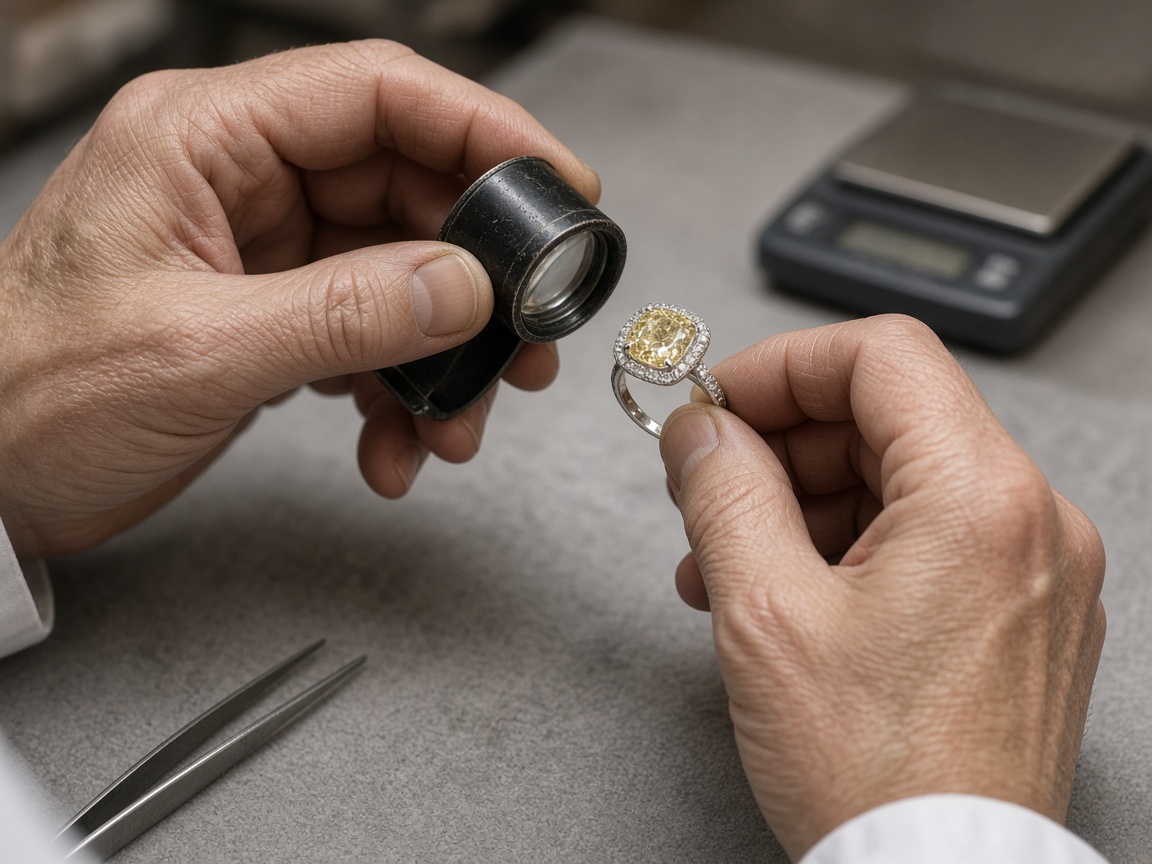
3. Our gemologist examines the pieces in Geneva
With your written authorisation, the company holding your goods arranges access for our gemologist to the viewing room inside the bonded area. Under FOCBS rules, examination and analysis of stored goods is a permitted operation and does not need a separate customs authorisation; for sensitive goods it is recorded in the inventory. The pieces do not leave customs supervision. Auctentic already travels across Europe to examine pieces where the owner prefers.
4. Verification and certification
The gemologist checks each piece against its existing reports: carat, colour, clarity, any treatment signs, the maker's signature and hallmarks for signed jewellery, and reference, movement and papers for watches. Where a stone has no recent laboratory report, a new one may add value. Sending a stone to a laboratory outside the bonded area requires a customs procedure, which the customs agent arranges.
5. Discreet presentation to international buyers
With your approval of the price and terms, the pieces are presented privately to our network of more than 2,000 professional international buyers. There is no public catalogue. Because the goods sit under suspended duties, buyers from outside Switzerland can consider them without Swiss import VAT being part of the price.
6. Negotiation, with no obligation to sell
We negotiate only on your behalf. You see every serious proposal and you can decline any of them. There is no seller's commission at Auctentic.
7. Payment and transfer of ownership
Once a sale is agreed, payment is made by bank transfer. On our standard sales, once a piece is authenticated and approved by our experts, funds are advanced to the client without waiting for the buyer's transfer. Ownership is then transferred and recorded with the warehouse operator, and the piece either stays in the Freeport in the new owner's name or leaves under the appropriate customs procedure.
Tax and customs: three scenarios
This section is general information, not tax or legal advice. The right answer depends on your residence, the history of each piece and the buyer. Please confirm your situation with your own tax adviser.
1. The piece stays in the Freeport after the sale. The supply of goods that remain under customs supervision in a free warehouse is exempt from Swiss VAT (VAT Act, art. 23 para. 2 no. 3bis). No import VAT is due as long as the piece stays in the bonded area.
2. The piece is released into Switzerland. Swiss import VAT applies, at the standard rate of 8.1% for watches and jewellery, normally calculated on the price plus costs up to the destination in Switzerland. Switzerland abolished customs duties on industrial goods (tariff chapters 25 to 97, which include jewellery, diamonds and watches) on 1 January 2024, but a customs declaration and import VAT are still required.
3. The piece is exported to another country. Swiss VAT is not charged on goods leaving under customs control; import taxes are due in the destination country. In the EU, import VAT is charged at that country's rate (for example Italy 22%, Spain 21%, the Netherlands 21%, France 20%), plus any customs duty. Under the EU tariff, loose polished non-industrial diamonds (7102 39) carry 0% duty and precious-metal jewellery under 7113 19 carries 2.5%; check the exact code for each piece.
Your own tax position. The Freeport suspends customs duties and VAT; it does not change income, capital gains or wealth tax rules in your country of residence. For example, for a French tax resident, a French tax lawyer notes that a sale of goods kept in Geneva falls under French rules, with a different regime depending on whether the object has always been outside the EU or was exported from France. Similar questions arise in Italy, Spain and the Netherlands. We are happy to work alongside your notary, adviser or private bank.
Documentation and compliance
A clean file shortens the sale and protects both sides. Expect to provide:
Proof of identity and ownership, and of the beneficial owner where the pieces are held through a company or trust. Owner details already appear in the Freeport inventory.
Provenance: purchase invoices, inheritance documents, earlier reports and storage records.
Grading reports for significant diamonds, and box and papers for watches where available.
Diamond origin evidence. The Kimberley Process certificate applies to rough diamonds only, not to polished stones or jewellery. Since 1 September 2024, however, Switzerland has banned imports and purchases of non-industrial diamonds of 0.5 carat or more processed in third countries if they contain Russian-origin diamonds. Documents showing where a stone came from, or that it was already in Switzerland or the EU before the ban, can matter at export.
Anti-money-laundering checks. Auctentic carries out its own identity checks on sellers. Under Swiss law, since 1 October 2026, dealers in precious stones and precious metals must carry out due diligence when they accept more than CHF 15,000 in cash. Our transactions are settled by bank transfer.
Costs and timelines
Freeport-related costs typically include storage and handling fees from the operator, insurance, customs agent fees for the exit procedure and, where needed, new laboratory reports. These are set by the operator, the insurer and the agent, so ask for a quote early.
Frequently asked questions
- Do I need to travel to Geneva? No. With your written authorisation, our gemologist can examine the pieces with the company that holds them.
- Can a piece be sold without leaving the Freeport? Yes. Ownership can change while the piece stays under customs supervision, and that supply is exempt from Swiss VAT. Direct sales to private individuals inside the bonded area are restricted, so the structure is agreed with the operator and its customs agent.
- Will I pay Swiss VAT when I sell? Not while the piece remains in the Freeport. Swiss import VAT of 8.1% applies only if the piece is released into Switzerland. If it is exported, import taxes are due in the destination country.
- Is the Geneva Freeport confidential? It is private and highly secure, but not anonymous. Since 2016 the owner's name and address must appear in the inventory available to Swiss customs. Auctentic adds its own discretion: no public catalogue and private presentations only.
- What documents will I need? Identity and ownership documents, provenance, any grading reports and, for watches, box and papers where available. Missing papers do not always prevent a sale; we will tell you what matters for each piece.
- Do diamonds need a Kimberley Process certificate? No, not for polished stones or jewellery. The Kimberley Process covers rough diamonds. Origin evidence can still matter because of sanctions on Russian-origin diamonds.
- Am I obliged to sell after the valuation? No. The valuation is confidential and comes with no obligation. You decide if, when and to whom.
Speak with an advisor
If you or a client hold jewellery, diamonds or collectible watches in the Geneva Freeport, we can help you see clearly what they are worth on today's international market, and manage a sale from Geneva if you decide to go ahead.
Request a Private Valuation

